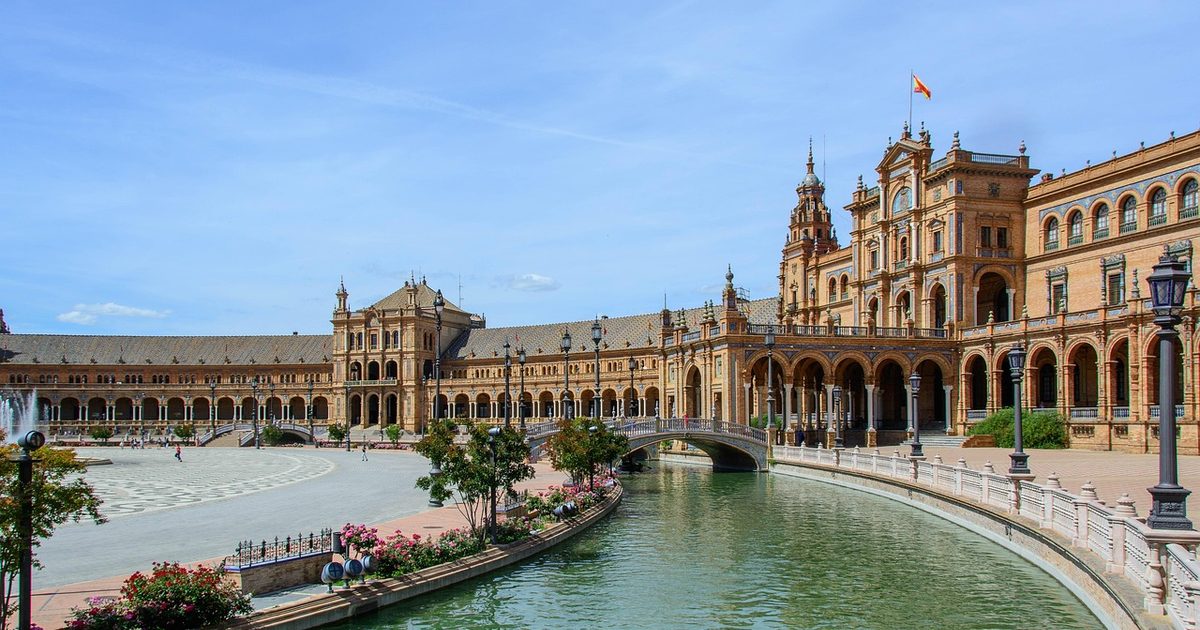
Spain consistently tops the list of destinations for British retirees — and with good reason. This guide covers the five questions that matter most: what it actually costs two people to live there, how you get legal residence after Brexit, what the move does to your UK State Pension, how you will be taxed, and how you access healthcare. It includes an itemised three-tier budget and a frank SWOT so you can plan with clear eyes.
Key takeaways
- A medium lifestyle for a couple costs around £2,200/month (illustrative and approximate, sourced as of June 2026)
- Your UK State Pension stays uprated here — it is in the EEA, so it is not frozen
- UK nationals are now third-country nationals and need a residence visa with an income threshold
- UK State Pensioners can usually access state healthcare via the S1 route
- Sterling/euro exchange-rate moves are a real risk to euro-denominated spending
- This is general information, not personal financial, tax or immigration advice
Why UK retirees move to Spain
Spain is the single most popular country in the world for British retirees, with several hundred thousand UK nationals registered as resident (figures illustrative and approximate, sourced as of June 2026, per UK government and Spanish padrón data). The draw is familiar: around 300 days of sun a year on much of the coast, a relaxed outdoor lifestyle, fresh affordable food, and long-established British communities on the Costa del Sol, Costa Blanca, the Balearics and the Canary Islands.
For many couples the appeal is also financial — a mid-range lifestyle that would feel stretched in southern England is comfortable in much of Spain. Before you commit, it is worth using proper financial planning tools to map your retirement income against local costs rather than relying on holiday impressions.
The money: a 3-tier monthly budget
Spain’s retirement costs vary widely by region: the Balearics and Barcelona run significantly higher than the Costas, which in turn are more expensive than inland Castile or Extremadura. The figures below represent a typical couple in a popular coastal expat area. Medium spending — roughly £2,200 a month — covers a comfortable apartment rental, regular dining out, and an active leisure life without any financial anxiety.
| Monthly cost (couple) | Basic | Medium | High |
|---|---|---|---|
| Rent (1–2 bed) | £700 | £1,050 | £1,900 |
| Utilities & internet | £150 | £200 | £280 |
| Groceries | £350 | £450 | £600 |
| Healthcare / insurance | £90 | £130 | £220 |
| Transport | £80 | £120 | £250 |
| Leisure & dining | £130 | £250 | £550 |
| Monthly total (GBP) | £1,500 | £2,200 | £3,800 |
| Monthly total (EUR) | €1,760 | €2,575 | €4,445 |
| Annual total (GBP) | £18,000 | £26,400 | £45,600 |
Figures are for a couple, in pounds per month, and are illustrative and approximate, sourced as of June 2026 at an illustrative exchange rate of £1 ≈ €1.17 (€1 ≈ £0.86). Cost-of-living lines draw on Numbeo and local cost indices; exchange rates and prices move, so treat these as a planning starting point, not a quote. This is information, not personal financial advice.
Visas & residence after Brexit
Since Brexit, UK nationals are third-country nationals in Spain and no longer have free-movement rights. To stay longer than 90 days in any 180 you need a residence visa. The usual retiree route is the non-lucrative visa (NLV), which is designed for people who can support themselves without working in Spain.
The NLV requires you to show passive income of roughly 400% of the IPREM benchmark — about €2,400 a month (≈€28,800 a year) for the main applicant, plus around €600 a month per dependant (thresholds illustrative and approximate, sourced as of June 2026, per Spanish consular guidance). You also need full private health cover and a clean criminal record. Pensions, investment income and savings can all count toward the threshold.
Your UK State Pension here
Good news on the State Pension: because Spain is in the EEA, your UK State Pension continues to rise each year under the triple lock, exactly as it would at home. It is not frozen. This is a meaningful advantage over destinations such as Australia or Canada, where the same pension would be locked at the rate first paid.
You claim and receive it in the normal way; it can be paid into a UK or Spanish account. Over a 25–30 year retirement the difference between an uprated and a frozen pension can run to tens of thousands of pounds, so this is worth modelling. Our projection tools let you stress-test your income over a long retirement, including currency swings.
Tax, healthcare & currency risk
If you spend more than 183 days a year in Spain you are generally Spanish tax-resident and taxed on your worldwide income. Under the UK–Spain double taxation treaty, UK government and civil-service pensions stay taxable only in the UK, while your State Pension and most private and workplace pensions become taxable in Spain. The treaty stops you being taxed twice but does not let you choose where you pay.
The much-discussed ‘Beckham law’ special expat regime is for people moving to Spain for employment and generally excludes pensioners and passive income — so most retirees cannot use it. Spain also levies regional wealth and ‘solidarity’ taxes on larger estates. Healthcare: as a UK State Pensioner you can usually register an S1 form, which gives you access to the Spanish state health system with the UK footing the bill. FX risk: your sterling pensions buy a variable number of euros, so a weaker pound squeezes your budget. A regulated financial adviser with cross-border experience can help you structure withdrawals tax-efficiently.
SWOT: retiring here at a glance
A quick strengths / weaknesses / opportunities / threats view of retiring to Spain as a UK national:
Strengths
- State Pension stays uprated (EEA)
- Reliable warm climate and outdoor lifestyle
- Large, well-established British communities
- S1 route into good-quality state healthcare
Weaknesses
- Worldwide income taxed once Spanish-resident
- Beckham-law expat regime usually closed to pensioners
- Regional wealth taxes on larger estates
- NLV bans working in Spain
Opportunities
- Lower mid-range living costs than southern England
- Strong rental market lets you trial an area before buying
- Easy short flights home keep family visits cheap
Threats
- Sterling/euro swings erode pension income
- Possible UK Inheritance Tax exposure based on long-term UK residence
- Property and bureaucracy pitfalls without local advice
Comparing destinations? See where Spain ranks in our round-up of the best countries to retire abroad for healthcare, or weigh up all twenty options in the complete guide to retiring abroad from the UK.
This guide is general information, not personal financial, tax, immigration or legal advice. Every figure is illustrative and approximate, sourced as of June 2026 and the rules change — take regulated advice before you act.
Where to live: popular cities for UK retirees
Choosing the right part of Spain matters as much as choosing Spain itself. The country stretches across very different climates, costs and lifestyles — the budget-friendly salt-lake town of Torrevieja is a world away from the cosmopolitan avenues of Barcelona. To help you narrow down, we have written dedicated guides for the eight areas most popular with British retirees:
- Alicante — Costa Blanca capital with one of Spain’s largest registered British communities, an international airport, tram to the coast, and a broad range of property from affordable to mid-market.
- Torrevieja — The most affordable town in this guide and one of the most British places in Spain, set beside pink salt lakes on the southern Costa Blanca. Ideal for retirees on a modest income.
- Málaga — The fast-growing Costa del Sol capital — lively food and culture scene, Cercanías train straight from the airport, and a range of neighbourhoods from the bohemian El Palo to the leafy El Limonar.
- Marbella — Spain’s most glamorous resort town: Nueva Andalucía golf valleys, Puerto Banús marina, and English-speaking private hospitals. Costs are the highest in this guide but the lifestyle reflects it.
- Valencia — Spain’s third city offers urban culture, paella on the beach, affordable property and excellent high-speed rail connections — a more balanced alternative to Barcelona for city lovers.
- Barcelona — The most international and expensive Spanish city, with world-class healthcare, superb public transport, and a vibrant expat scene. Sitges, 30 km south, offers a smaller-town coastal option for those priced out of the city.
- Palma de Mallorca — Island living with year-round direct UK flights, a large British and Northern European community, and a range of neighbourhoods from the upscale Son Vida to the local-feeling Santa Catalina market district.
- Madrid — The capital appeals to retirees who want culture, excellent healthcare, and the best flight connections in Spain. Suburbs such as Pozuelo de Alarcón and La Moraleja have long-established international families and English-medium schools for visiting grandchildren.
Each guide covers expat neighbourhoods, local hospitals (including the S1 public-health route), airport links, illustrative property costs, and a monthly cost-of-living summary. Use our scenario tools to stress-test your budget for whichever area appeals before you commit.
Important: This guide is for general educational purposes only and does not constitute financial advice. Tax rules can change and individual circumstances vary. If you need advice tailored to your situation, please consult a qualified, FCA-regulated financial adviser. You can browse advisers in our adviser directory.