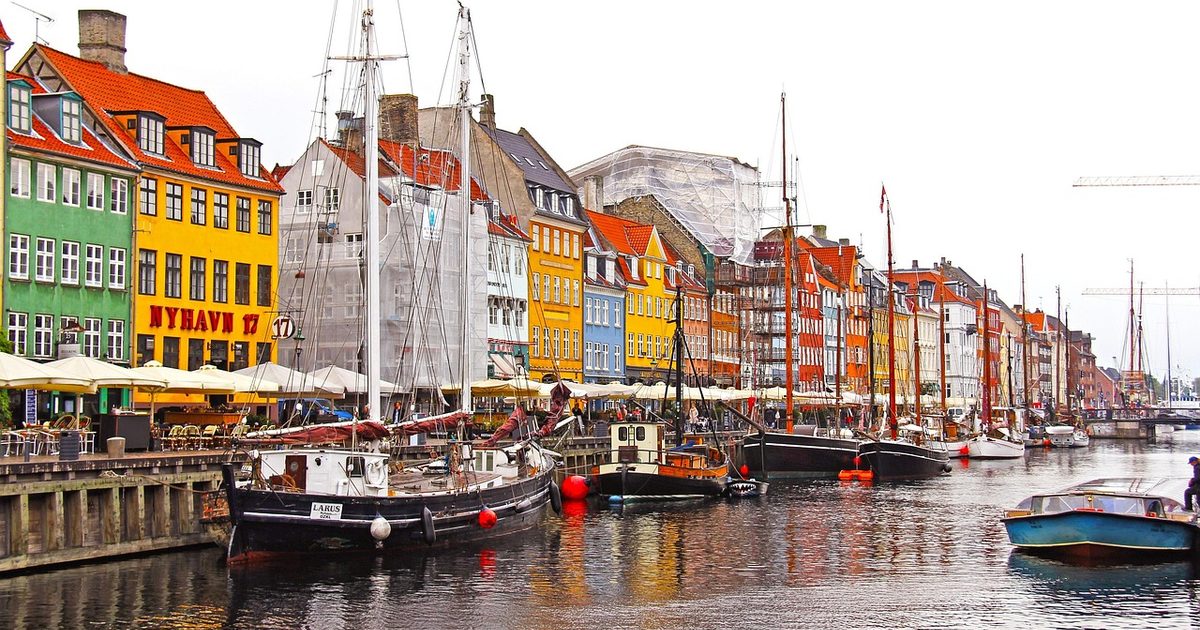
Denmark is one of the world’s most liveable countries and a compelling destination for UK working families seeking outstanding public services, a generous work-life balance, and some of Europe’s highest salaries. Around 16,000 UK nationals live there. Childcare is heavily subsidised (parents pay a maximum 25% of cost), state schools are free and excellent, and the UK State Pension is uprated in Denmark. The headline income tax rate is 55.9% — but the <em>forskerordning</em> expat scheme cuts this to 32.84% for qualifying professionals for up to 7 years.
Key takeaways
- A family of 4 needs around £5,100/month (£61,200/year) in Copenhagen or Aarhus — illustrative, June 2026; forskerordning window significantly improves net pay
- UK State Pension is uprated in Denmark (EEA — triple lock applies), unlike in Australia or Canada
- Forskerordning: 27% flat tax (32.84% combined) for up to 7 years for qualifying professionals earning DKK 75,100+/month
- Childcare: parents pay maximum 25% of cost via municipal dagtilbud; free state schools from age 6
- Information only, not personal financial advice
What does a family of four spend each month?
The table below sets out an itemised monthly budget for two adults and two school-age children at three lifestyle levels. The Medium column — around £5,100 a month (£61,200/year) — reflects a comfortable professional lifestyle in Copenhagen or Aarhus. All figures are in GBP at illustrative June 2026 exchange rates (DKK 1 ≈ £0.113).
| Monthly cost (family of 4) | Basic | Medium | High |
|---|---|---|---|
| Rent (3-bed apt / house) | £1,300 | £2,200 | £3,600 |
| Utilities & internet | £160 | £220 | £310 |
| Groceries | £560 | £730 | £1,000 |
| Healthcare / insurance | £20 | £60 | £180 |
| Childcare (dagtilbud max parent contribution) | £290 | £340 | £400 |
| State school (free) / int’l school fees | £0 | £0 | £1,200 |
| Transport (public + bike + car) | £180 | £310 | £550 |
| Eating out & leisure | £350 | £620 | £1,000 |
| Clothing & personal care | £160 | £290 | £460 |
| Holidays & contingency ÷12 | £170 | £330 | £560 |
| Total (approx) | £3,190 | £5,100 | £9,260 |
| Annual (approx) | £38,280 | £61,200 | £111,120 |
The headline pros and cons
The quick case for and against a UK working family relocating to Denmark:
Pros
- UK State Pension stays uprated (EEA — triple lock applies)
- Forskerordning: 27% flat rate (32.84% combined) for up to 7 years for qualifying professionals
- Heavily subsidised childcare (max 25% of cost); free state schools with compulsory English from age 7
- 37-hour working week; world-class work-life balance
- Top 10 globally for safety (GPI 2024); cycle-friendly cities; English widely spoken
Cons
- Very high standard income tax (~55.9%) once forskerordning expires
- Post-Brexit: work permit required; Fast-Track only via certified employers
- High cost of eating out, alcohol, and consumer goods (high VAT and excise duties)
- Car purchase registration tax is very high — can double the purchase price
The forskerordning, childcare, and State Pension — the bottom line
Denmark is in the EEA, so your UK State Pension continues to rise each year under the triple lock while you live there. The TCA Social Security Coordination Protocol means you pay Danish social security only during Danish working years, but you are not building UK NI qualifying years unless you pay voluntary contributions.
Denmark’s two headline financial advantages are the forskerordning expat tax scheme (27% flat rate for up to 7 years for qualifying professionals on DKK 75,100+/month) and heavily subsidised childcare (parents pay at most 25% of cost). Together, they substantially improve the financial picture during a Danish posting. Use our projection tools to model the forskerordning window, uprated State Pension, subsidised childcare savings, and voluntary NI record together. Take advice from a regulated financial adviser with UK–Denmark cross-border expertise before you commit. For the full picture on work permits, folkeskole, and the Danish healthcare system, read our companion guide to working and living in Denmark.
This article is general information, not personal financial, tax, immigration or legal advice. Every figure is illustrative and approximate, sourced as of June 2026 — rules and costs change. Take regulated advice before you act.
Important: This article is for general educational purposes only and does not constitute financial advice. Tax rules can change and individual circumstances vary. If you need advice tailored to your situation, please consult a qualified, FCA-regulated financial adviser. You can browse advisers in our adviser directory.