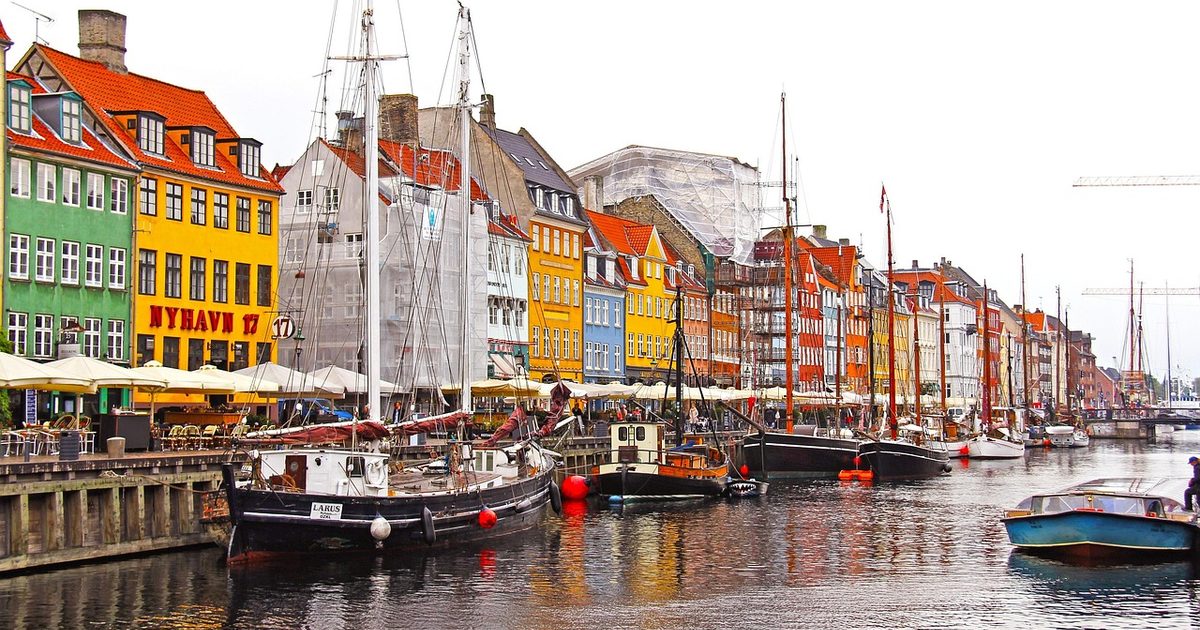
Denmark consistently ranks among the world’s most liveable countries — high salaries, exceptional public services, generous childcare subsidies, and an outstanding work-life balance. Around 16,000 UK nationals live there. Post-Brexit UK nationals need a work permit, but Denmark’s <strong>Fast-Track scheme</strong> and <strong>Positive List</strong> of shortage occupations provide relatively accessible routes for skilled professionals. Denmark also offers a compelling <strong>27% flat-rate expat tax scheme</strong> (<em>forskerordning</em>) for qualifying workers — in a country where the standard top marginal rate exceeds 55%.
Key takeaways
- Post-Brexit: UK nationals need a work permit; Denmark’s Fast-Track scheme (DKK 465,000+ salary) is among the most accessible skilled-worker routes in the EU
- UK State Pension is uprated in Denmark (EEA — triple lock applies), unlike in Australia, Canada, or New Zealand
- Forskerordning: 27% flat income tax rate (32.84% combined) for up to 7 years for qualifying professionals — vs standard 55.9% marginal rate
- Childcare maximum parent contribution: ≈£368/month (væggestue) and ≈£239/month (børnehave) — heavily subsidised
- A medium lifestyle for a family of 4 costs around £5,100/month (£61,200/year) in Copenhagen — illustrative, June 2026
- This is general information, not personal financial, tax, immigration or legal advice
Work & income: what UK professionals earn
Denmark has some of the highest average wages in Europe. Typical gross annual salaries for senior professional roles in Copenhagen: DKK 700,000–1,500,000 (£79,100–169,500) in technology, finance, consulting, pharmaceutical and biotech (Novo Nordisk, Leo Pharma), and engineering (Mærsk, Vestas). Senior executive and specialist positions exceed DKK 2,000,000 (£226,000).
Danish income tax is high: the effective total marginal rate (state + municipal + labour market contribution) for most professionals on DKK 700,000+ is approximately 55.9%. However, the trade-off is comprehensive: free excellent schooling, subsidised childcare, universal healthcare, and some of the world’s most generous social benefits. Use our financial planning tools to model Danish net income against your UK salary. A regulated financial adviser with UK–Denmark cross-border expertise is recommended before the move, particularly around the forskerordning scheme and UK pension treatment.
The money: a 3-tier monthly family budget
What does family life in Denmark actually cost? The breakdown that follows covers two adults and two school-age children, expressed in GBP at illustrative June 2026 rates (DKK 1 ≈ £0.113; £1 ≈ DKK 8.85). At the Medium tier — about £5,100 a month, or £61,200 a year — a household lives comfortably and professionally in Copenhagen or Aarhus, with provincial towns generally running 15–25% less.
| Monthly cost (family of 4) | Basic | Medium | High |
|---|---|---|---|
| Rent (3-bed apt / house) | £1,300 | £2,200 | £3,600 |
| Utilities & internet | £160 | £220 | £310 |
| Groceries | £560 | £730 | £1,000 |
| Healthcare / insurance | £20 | £60 | £180 |
| Childcare (dagtilbud max parent contribution) | £290 | £340 | £400 |
| State school (free) / int’l school fees | £0 | £0 | £1,200 |
| Transport (public + bike + car) | £180 | £310 | £550 |
| Eating out & leisure | £350 | £620 | £1,000 |
| Clothing & personal care | £160 | £290 | £460 |
| Holidays & contingency ÷12 | £170 | £330 | £560 |
| Total (approx) | £3,190 | £5,100 | £9,260 |
| Annual (approx) | £38,280 | £61,200 | £111,120 |
All figures are illustrative and sourced as of June 2026. Childcare row reflects the statutory maximum parent contribution (25% of cost); actual cost depends on municipality and hours. Medium column assumes both school-age children in state school (free).
Visas and residency post-Brexit
Since 1 January 2021, UK nationals are third-country nationals in Denmark and need a residence and work permit from the Danish Immigration Service (Udlændingestyrelsen). The main routes are:
- Fast-Track scheme (Betalingsordningen) — Employers certified under the Fast-Track scheme can sponsor work permits for qualifying employees without a job-market test. Minimum salary threshold: DKK 465,000/year gross (£52,500) in 2026. Processing for certified employers is typically 4–6 weeks.
- Pay Limit scheme — For workers earning at least DKK 465,000/year. Does not require the employer to be a certified sponsor.
- Positive List (Positivlisten) — Work permits for workers in shortage occupations (engineers, IT specialists, healthcare workers, teachers). No salary threshold; specific job titles listed by SIRI.
- EU Blue Card — For highly qualified workers with a minimum salary of DKK 543,000/year (£61,400) and a higher education qualification.
Family reunification: Your spouse/civil partner and unmarried children under 18 can apply for family reunification once you hold a valid work and residence permit. Processing typically takes 2–4 months.
Schools & education
Denmark’s state school system (folkeskole, ages 6–16) is free, inclusive, and well funded. The curriculum is taught in Danish, with compulsory English from Year 2 (age 7–8). Danes are among the most proficient English speakers in continental Europe; school immersion typically takes 6–12 months. Friskole (independent free schools, publicly funded) and privatskole (fee-paying independent schools) are also available.
International schools with English-medium instruction operate in Copenhagen, Aarhus, and Odense. Copenhagen International School (COIS) is the largest, offering the IB curriculum from age 3 to 18. Annual fees at international schools typically run DKK 110,000–180,000 per child per year (£12,400–20,300). Figures are illustrative and sourced as of June 2026.
Childcare
Denmark’s childcare system is among the most generous in the world. All children aged 6 months to school age are guaranteed a place at a dagtilbud. Municipal facilities operate on a maximum parent-contribution cap of 25% of cost; the municipality subsidises the rest. The maximum monthly fee for a full-time væggestue (0–3 years) is approximately DKK 3,258 (£368) and for a børnehave (3–6 years) approximately DKK 2,116 (£239). A sibling discount reduces the second child’s fee by approximately 50%. From age 6, the optional børnehaveklasse pre-school year is free. State primary (folkeskole) is free from age 7. Figures are illustrative and sourced as of June 2026.
Healthcare
Denmark has a universal public healthcare system (sundhedssystemet) funded by general taxation. All legal residents are registered with a GP and receive free healthcare for GP, hospital, and most specialist care. Prescription medicines are heavily subsidised. Dental care is free for children up to age 18 and subsidised for adults. The public system is high quality, though waiting times for elective procedures and specialist appointments can be long in larger cities. Many employers offer private health insurance (e.g., through Codan, PFA, or Tryg) for faster access to private specialists. Emergency and urgent care is of very high quality.
Money, tax & NI totalisation
Denmark is an EU member state covered by the UK–EU TCA Social Security Coordination (SSC) Protocol: you pay social security in Denmark only (as country of work) and your UK State Pension is uprated each year under the triple lock while you live in Denmark. You are not building UK NI qualifying years during Danish working years unless you pay voluntary Class 2 or Class 3 contributions.
Forskerordning (expat / researcher tax scheme): Qualifying foreign employees and researchers can elect to pay a flat 27% tax rate (plus 8% labour market contribution = 32.84% effective combined rate) on their gross Danish salary for up to 7 years, instead of the standard marginal rate of 55.9%. To qualify, your average monthly salary must be at least DKK 75,100 gross (£8,490) in 2026. The scheme applies to employees recruited from abroad who have not been resident or subject to Danish tax on employment income in the preceding 10 years. For a professional on DKK 1,200,000/year (£135,600), the forskerordning saves approximately DKK 270,000/year (£30,500) in tax. Use our projection tools to model the forskerordning window, uprated UK State Pension, and voluntary NI record together. Consult a regulated financial adviser with UK–Denmark cross-border expertise before the move: the UK–Denmark Double Taxation Agreement, treatment of UK pension contributions, and optimal timing of the forskerordning application all require specialist planning.
Daily life, safety & crime
Denmark ranked 10th in the Global Peace Index 2024 — one of the safest countries in the world. Violent crime is rare. Copenhagen is consistently voted one of the world’s most liveable cities: clean, cycle-friendly (over 390 km of cycle lanes in Copenhagen alone), with an outstanding food scene, strong cultural life, and a flat social hierarchy that makes it easy for non-Danes to integrate professionally. The Danish concept of hygge — a philosophy of cosiness, warmth, and enjoying good moments with others — pervades everyday life. The standard working week is 37 hours and overtime is genuinely uncommon in most sectors. Crime figures are illustrative and sourced from GPI 2024 and Statistics Denmark 2025.
Family SWOT: working in Denmark
A strengths / weaknesses / opportunities / threats view of a UK working family relocating to Denmark:
Strengths
- UK State Pension stays uprated (EEA — triple lock applies)
- Forskerordning: 27% flat tax (32.84% combined) for up to 7 years for qualifying professionals
- World-class subsidised childcare (max ≈£368/month) and free state schools
- 37-hour working week; generous statutory parental leave; outstanding work-life balance
- Top 10 globally for safety; highly English-speaking; easy integration for UK families
Weaknesses
- Very high standard income tax (~55.9%) once the forskerordning expires
- Post-Brexit: work permit required; Fast-Track only available via certified employers
- Very high cost of alcohol, eating out, and consumer goods (high VAT + excise duties)
- Registration tax on cars is extremely high — buying a new car in Denmark can cost 150% of its ex-factory value
Opportunities
- Strong demand for English-speaking professionals in pharma (Novo Nordisk), engineering (Vestas, Mærsk), and technology
- Copenhagen is a leading European green-tech and design hub
- Danish citizenship available after 9 years of ordinary residence (8 with language test)
Threats
- GBP–DKK exchange rate risk on UK savings; DKK is pegged to EUR so is relatively stable
- Forskerordning salary threshold may rise; scheme terms can change
- Copenhagen housing market is tight; rental supply is constrained and rents have risen sharply
Comparing destinations? See where Denmark ranks in our round-up of the best places to move abroad for schools and education, or read the full Working Abroad from the UK guide for all twenty destinations compared side-by-side.
Important: This guide is for general educational purposes only and does not constitute financial advice. Tax rules can change and individual circumstances vary. If you need advice tailored to your situation, please consult a qualified, FCA-regulated financial adviser. You can browse advisers in our adviser directory.