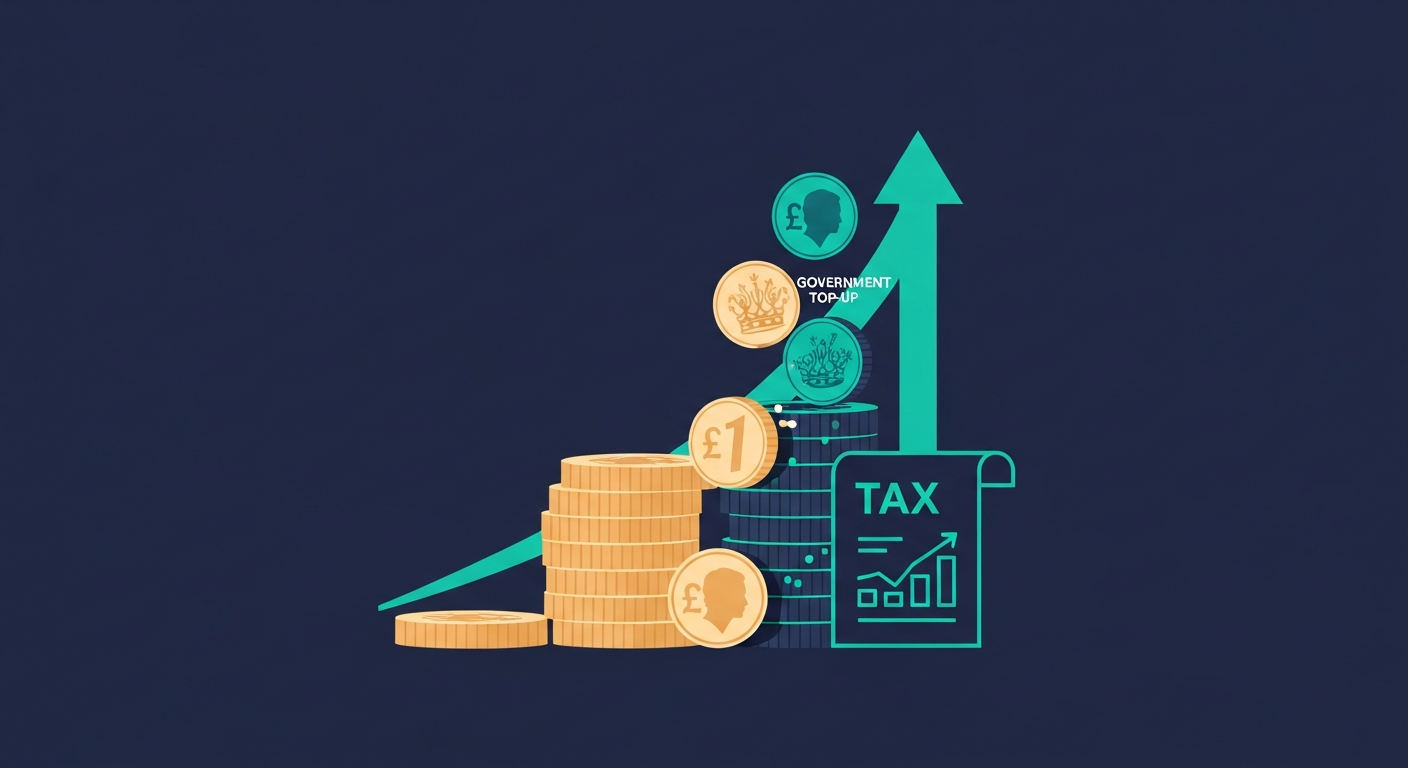
Pension tax relief is one of the most valuable benefits of saving into a pension. The government effectively adds money to your pension pot based on the rate of income tax you pay. Understanding how it works can help you make the most of your contributions.
Key takeaways
- Basic rate taxpayers get 20% tax relief; higher rate taxpayers get 40%
- The annual allowance for 2026/27 is £60,000
- You can carry forward unused allowance from the previous three tax years
- Salary sacrifice can save National Insurance as well as income tax
- The lifetime allowance has been replaced by lump sum allowances
How Pension Tax Relief Works
When you contribute to a pension, you receive tax relief on your contributions. This means the government adds money to your pension to reflect the tax you would have paid on that income.
For a basic rate taxpayer (20%), every £80 you contribute is topped up to £100 by the government. For a higher rate taxpayer (40%), the effective cost of a £100 pension contribution is just £60, and for an additional rate taxpayer (45%), it is £55.
How you receive the relief depends on your pension type. With most personal pensions and SIPPs, the pension provider claims the basic rate (20%) directly from HMRC. Higher and additional rate taxpayers claim the extra relief through their Self Assessment tax return. Our tax and pension planning tools can model how contributions affect your take-home pay and overall tax position.
With workplace pensions using "salary sacrifice" or "net pay" arrangements, the relief works differently and may be applied automatically before tax is calculated.
Annual Allowance
The annual allowance is the maximum amount you can contribute to pensions and still receive tax relief in a single tax year. For 2026/27, this is £60,000 or your total UK earnings, whichever is lower.
Employer contributions count towards this limit too. If you exceed the annual allowance, you may face a tax charge on the excess amount.
Some high earners may have a reduced annual allowance (the "tapered annual allowance"). If your adjusted income exceeds £260,000, your allowance is reduced by £1 for every £2 of income above that threshold, down to a minimum of £10,000.
Carry Forward
If you have not used your full annual allowance in the previous three tax years, you may be able to "carry forward" the unused amount. This allows you to make larger contributions in the current year without exceeding your allowance.
To use carry forward, you must have been a member of a registered pension scheme in each of the years you want to carry forward from. You must also use the current year's allowance first before dipping into previous years.
Salary Sacrifice
Salary sacrifice is an arrangement where you agree with your employer to reduce your salary, with the employer paying the difference into your pension instead. This can be more efficient than personal contributions because:
- You save on employee National Insurance contributions (currently 8% on earnings between £12,570 and £50,270)
- Your employer saves on employer National Insurance contributions, and may pass some of this saving on to you as an additional pension contribution
- Tax relief is applied at source, so there is no need to claim extra relief through Self Assessment
However, salary sacrifice reduces your official salary, which could affect mortgage applications, statutory pay (maternity, sick pay), and some benefits. If you are unsure whether salary sacrifice is right for you, a regulated financial adviser can help you weigh the options.
Lifetime Limits and the Lump Sum Allowance
The lifetime allowance (LTA) was abolished from April 2024. However, two new allowances now apply:
- The Lump Sum Allowance (LSA) of £268,275 limits the total tax-free lump sums you can take from pensions
- The Lump Sum and Death Benefit Allowance (LSDBA) of £1,073,100 covers both tax-free lump sums and certain death benefits
If you had LTA protection before April 2024, you may have higher limits.
Important: This guide is for general educational purposes only and does not constitute financial advice. Tax rules can change and individual circumstances vary. If you need advice tailored to your situation, please consult a qualified, FCA-regulated financial adviser. You can browse advisers in our adviser directory.