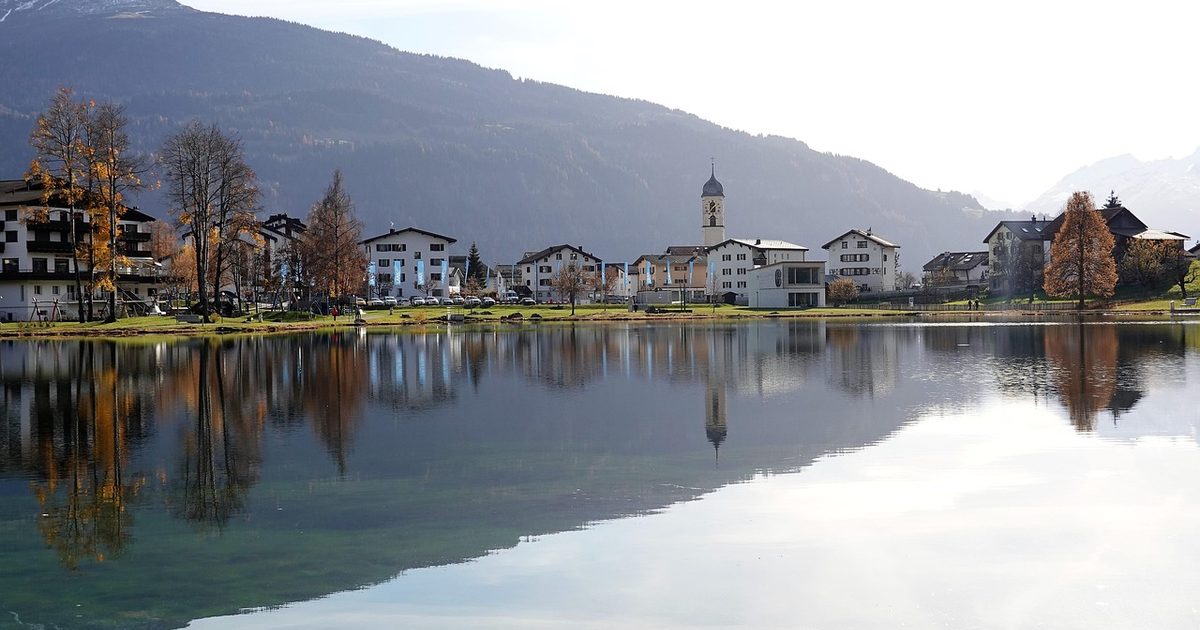
Switzerland is one of the world’s most desirable — and most expensive — destinations for UK working families. Around 40,000 UK nationals live there, drawn by very high salaries in finance, pharmaceuticals, technology, and international organisations, a very high standard of living, political stability, and exceptional natural beauty. As a non-EU/EEA country, Switzerland has its own bilateral agreement with the UK on social security, and the immigration route for UK nationals is separate from the EU Blue Card system.
Key takeaways
- UK nationals need a Swiss B permit (employer-sponsored, subject to non-EU/EEA quota) — start the process 2–3 months before your planned start date
- UK State Pension is uprated in Switzerland (UK–Swiss bilateral SSA provides for uprating, unlike Australia or Canada)
- A medium lifestyle for a family of 4 costs around £9,740/month (£116,900/year) — illustrative, June 2026; very high nominal salaries typically offset these costs
- Healthcare insurance is mandatory, per-person, and not employer-provided — budget £900–1,400/month for a family of four
- International school fees in Zurich or Geneva can reach CHF 40,000/year per child; employer school allowances are common in finance and pharma
- This is general information, not personal financial, tax, immigration or legal advice
Work & income: what UK professionals earn
Switzerland consistently offers some of the highest nominal salaries in the world. Zurich, Geneva, and Basel are global financial and pharmaceutical hubs; Zug and Baar host major commodity trading and technology firms. A senior engineer, finance professional, or specialist doctor in Zurich or Geneva can earn CHF 150,000–300,000 (£135,000–270,000) gross per year. The median gross salary in Switzerland is approximately CHF 82,000/year (£73,800) in 2026.
Swiss income tax operates at three levels: federal, cantonal, and municipal. Federal tax is low (maximum 11.5% on employment income). Cantonal and municipal rates vary dramatically — Zug and Nidwalden have the lowest total rates; Geneva and Vaud are among the highest. The effective combined rate (federal + cantonal + municipal) for a professional on CHF 200,000 ranges from approximately 22% (Zug) to 38% (Geneva). Switzerland has no withholding at source for Swiss residents; you file an annual tax return. Use our financial planning tools to model Swiss cantonal tax alongside your salary and compare net income with the UK.
A regulated financial adviser with UK–Swiss cross-border expertise is strongly recommended: the interaction between UK tax residency rules, Swiss lump-sum taxation for wealthy individuals, and UK pension obligations is complex and the cost of errors is high.
The money: a 3-tier monthly family budget
Here is an itemised monthly budget for a family of four (2 adults, 2 school-age children). All figures are in GBP at illustrative June 2026 exchange rates (CHF 1 ≈ £0.90). Switzerland is one of the most expensive countries in the world; even the ‘Basic’ column reflects a significantly higher absolute cost than most Western European destinations.
| Monthly cost (family of 4) | Basic | Medium | High |
|---|---|---|---|
| Rent (3-bed apt) | £2,600 | £3,600 | £5,500 |
| Utilities & internet | £250 | £320 | £430 |
| Groceries | £820 | £1,100 | £1,600 |
| Healthcare (KVG mandatory insurance) | £620 | £900 | £1,400 |
| Transport (SBB pass / car) | £360 | £500 | £800 |
| School fees (state = £0; international) | £0 | £1,500 | £2,800 |
| Childcare (Krippe / Kita) | £550 | £800 | £1,200 |
| Eating out & leisure | £360 | £600 | £1,000 |
| Other (clothing, subscriptions, etc.) | £280 | £420 | £700 |
| Monthly total | £5,840 | £9,740 | £15,430 |
| Annual total | £70,100 | £116,900 | £185,200 |
Figures are illustrative estimates for a family of four (two adults, two school-age children), sourced as of June 2026 (CHF 1 ≈ £0.90). Switzerland has mandatory health insurance that is not employer-provided; the KVG premium is per-person and varies by canton and insurer — the figures above are representative. ‘Basic’ uses state schools and SBB public transport; ‘Medium’ includes an international school; ‘High’ uses a top-tier international school in Zurich or Geneva.
Permits: B and L permits for UK nationals
Switzerland is not an EU/EEA member. UK nationals are not covered by the EU Blue Card system. Instead, UK nationals working in Switzerland require a Swiss residence and work permit. Non-EU/EEA nationals (which includes UK nationals post-Brexit) are subject to annual quotas set by the Swiss Federal Council. The main permit categories are:
- B permit (Aufenthaltsbewilligung) — for employees with a contract of 12 months or more (or indefinite). Valid for one year initially and renewable. The employer applies to the cantonal migration office (Migrationsamt) on your behalf before you arrive. After 10 years of residence (or 5 years on a B permit) you can apply for a C permit (settlement).
- L permit (Kurzaufenthaltsbewilligung) — for short-term assignments of less than 12 months, renewable up to 24 months.
Non-EU/EEA quotas are limited: typically around 8,500 new B permits and 4,500 new L permits per year for non-EU/EEA nationals. Employers prioritise roles where they cannot find Swiss or EU candidates. UK professionals in finance, pharma, tech, and international organisations in Geneva tend to have the best prospect of employer sponsorship within quota. Your employer should begin the permit process 2–3 months before your planned start date. Family reunification for spouses and minor children of B permit holders is possible but requires the permit holder to have been resident for a minimum period and to demonstrate suitable housing and financial means.
Schools & education
Switzerland’s free cantonal state schools are of a high standard. Schooling is compulsory from age 6 (from 4 in some cantons). Teaching is in the local cantonal language: German in Zurich, Basel, and Bern; French in Geneva, Lausanne, and Vaud; Italian in Ticino. Children of UK families are admitted to state schools and language acquisition is generally fast at primary age. The Swiss school-leaving qualification (Maturität) is internationally recognised.
International schools are numerous and well-established, particularly in Geneva, Zurich, Basel, Lausanne, and Zug. The International School of Geneva (Ecolint), the British International School of Zurich, the International School of Basel, and several IB schools offer English-medium instruction including GCSEs, A Levels, and the IB Diploma. Annual fees typically range from CHF 15,000–40,000 per child (£13,500–36,000). These fees are very high even by European standards; many expat packages in banking and pharma include a school fee allowance.
Childcare
Swiss childcare (Krippe or Kita) is predominantly private and expensive. Costs vary by canton: in Zurich, full-day Krippe costs approximately CHF 2,500–3,500/month per child (£2,250–3,150) without subsidy. Some cantons (notably Zurich and Geneva) offer income-tested subsidies, but the threshold for subsidy eligibility at professional salary levels is often not met. Childcare supplementation (Betreuungsgutschein) exists in some municipalities. From age 4, Kindergarten (pre-school) is free for 4–5 half-days per week in most cantons; full-day care (Tagesschule or lunch clubs) carries an additional charge. Figures are illustrative and sourced as of June 2026; cantonal rules differ significantly.
Healthcare
Switzerland has mandatory basic health insurance (Krankenversicherung, KVG/LAMal). Every resident must purchase it within three months of arrival from a regulated insurer (not provided by employers). Premiums are not income-linked but vary by canton, insurer, chosen deductible (Franchise), and insured person’s age. In Zurich in 2026, a standard adult basic premium is approximately CHF 450–600/month (£405–540); a child’s basic premium is approximately CHF 100–150/month (£90–135). The annual deductible is between CHF 300 (minimum) and CHF 2,500 (maximum, chosen by the insured). Choosing a higher deductible reduces the premium but increases out-of-pocket costs. Supplementary insurance (VVG/LCA) covers private wards, alternative medicine, dental, and more. Switzerland’s healthcare quality is exceptional — it consistently ranks in the top three globally for outcomes.
Money, tax & NI totalisation
The UK–Switzerland Social Security Agreement (SSA), which came into force in November 2021 replacing the previous EU-framework agreement, coordinates social security contributions. While you are working and paying AHV/IV contributions in Switzerland, you are not building UK NI qualifying years. The SSA provides that Swiss AHV contributions may be taken into account for certain UK benefit purposes, but the two systems are distinct — you should pay voluntary UK NI contributions to continue building UK State Pension qualifying years. Class 3 voluntary NI costs £17.45/week in 2026/27.
Switzerland is not in the EEA. Your UK State Pension position in Switzerland depends on the UK–Switzerland bilateral agreement, which does provide for uprating — meaning your UK State Pension continues to rise each year under the triple lock while you live in Switzerland, unlike in Australia, Canada, and New Zealand. Use our projection tools to model AHV pension accrual, UK State Pension uprating, voluntary NI contributions, and Swiss cantonal tax side by side across your career horizon. Consult a regulated financial adviser with UK–Swiss cross-border expertise before making any major financial commitments: the interactions between Swiss pillar pension savings (1st, 2nd, and 3rd pillar), UK pension treatment, and UK IHT on worldwide assets are significant and easy to get wrong.
Switzerland’s compulsory occupational pension (2nd pillar, BVG/LPP) is employer and employee funded and provides a lump sum or annuity on retirement. It is separate from AHV and can be substantial for high earners — worth factoring into your overall retirement modelling.
Daily life, safety & crime
Switzerland ranks 11th in the Global Peace Index 2024 — one of the safest countries in the world. Violent crime is extremely low. Switzerland consistently ranks among the top five countries globally for quality of life, infrastructure, healthcare quality, and environmental standards. The country operates in four languages (German, French, Italian, Romansh); in financial centres and international organisations, English is the working language for many. The natural environment — Alps, lakes, national parks — is exceptional. The cost of recreation (dining out, skiing, events) is high but matched by quality. Crime figures are illustrative and sourced from the GPI 2024 and Swiss Federal Statistical Office 2025 data.
Family SWOT: working in Switzerland
A strengths / weaknesses / opportunities / threats view of a UK working family relocating to Switzerland:
Strengths
- UK State Pension stays uprated (UK–Swiss bilateral SSA provides for uprating)
- Very high nominal salaries in finance, pharma, and tech offset very high costs
- Low-to-moderate income tax depending on canton — Zug and Schwyz are among the lowest in the world
- Exceptional healthcare, infrastructure, schools, and quality of life
- 2nd-pillar BVG occupational pension builds a meaningful retirement pot
Weaknesses
- Non-EU/EEA quota limits mean permit availability is not guaranteed, even with a strong employer
- Healthcare insurance is mandatory, per-person, and expensive — particularly for families
- Childcare costs are among the highest in the world; subsidies rarely apply at professional income levels
- International school fees are very high; many employers’ packages are needed to cover them
Opportunities
- Cantonal tax competition means choosing your canton wisely can materially reduce your tax bill
- C permit (settlement) available after 10 years; provides permanent residence rights
- International organisations (UN, WHO, Red Cross, WEF) in Geneva offer unique career opportunities and often provide school fee and housing allowances
Threats
- UK IHT on worldwide assets still applies if you remain UK-domiciled — a live issue for high earners accumulating significant Swiss-held assets
- Gaps in UK NI record accumulate unless voluntary Class 3 contributions are paid; the annual cost is £908 in 2026/27
- CHF/GBP exchange rate swings (CHF typically strengthens in global risk-off periods) affect the sterling value of Swiss earnings and savings
- B permit quota fills quickly in peak years — start employer sponsorship process early
Comparing destinations? See where Switzerland ranks in our round-up of the lowest-tax destinations for UK workers abroad, or read the full Working Abroad from the UK guide for all twenty destinations compared side-by-side.
Important: This guide is for general educational purposes only and does not constitute financial advice. Tax rules can change and individual circumstances vary. If you need advice tailored to your situation, please consult a qualified, FCA-regulated financial adviser. You can browse advisers in our adviser directory.