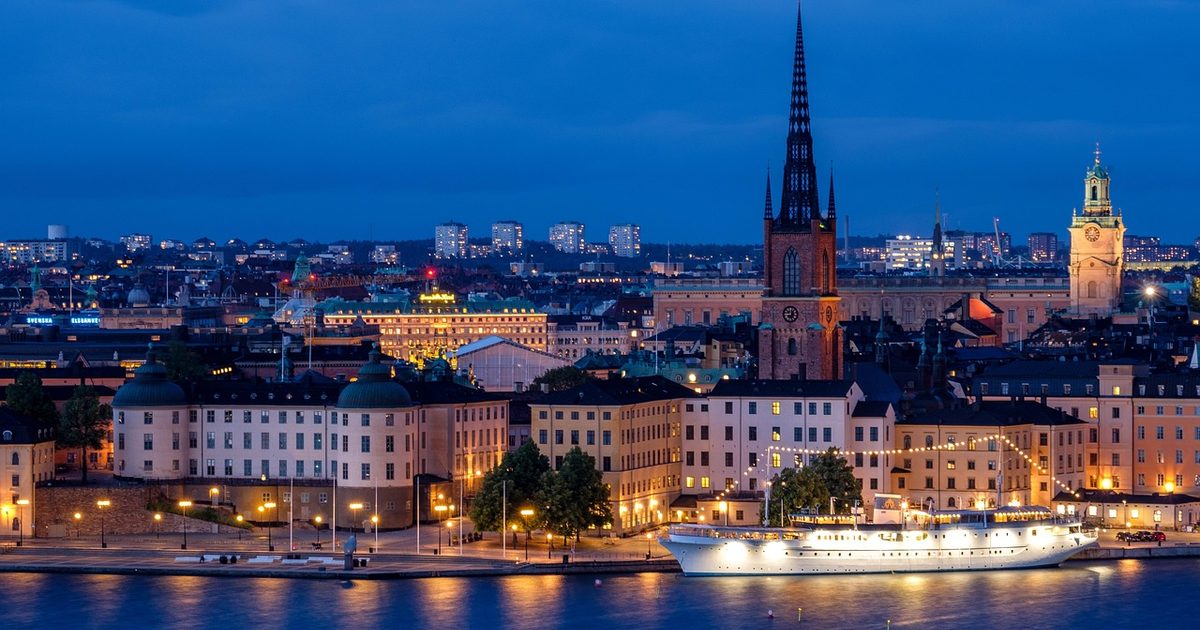
Sweden is one of Europe’s most appealing destinations for UK working families who prioritise quality of life, work-life balance, and outstanding public services. Around 25,000 UK nationals live there. Sweden has very high income tax, but the trade-off — heavily subsidised childcare (often just £100–150/month per child), free excellent state schools, world-class parental leave, universal healthcare, and some of the lowest effective childcare costs in northern Europe — changes the financial picture significantly for families. Post-Brexit, UK nationals need a work permit, but Sweden’s job market for international talent in technology, engineering, and life sciences is strong.
Key takeaways
- Post-Brexit: UK nationals need a Swedish work permit from Migrationsverket; union consultation required but process is well-established
- UK State Pension is uprated in Sweden (EEA — triple lock applies), unlike in Australia, Canada, or New Zealand
- Expert Tax (Expertskatt): 25% income reduction for up to 5 years for qualifying specialists on salary > SEK 89,200/month
- Childcare via maxtaxa cap is approximately £129/month per child — one of the lowest in Europe
- A medium lifestyle for a family of 4 costs around £4,480/month (£53,760/year) in Stockholm — illustrative, June 2026
- This is general information, not personal financial, tax, immigration or legal advice
Work & income: what UK professionals earn
Sweden has a strong labour market for international professionals, particularly in technology, engineering, life sciences (AstraZeneca, Ericsson, Spotify, IKEA, Volvo), and finance. Typical gross annual salaries in Stockholm for senior professional roles run from SEK 650,000–1,500,000 (£48,000–111,000) in technology and engineering, with senior management and specialist positions reaching SEK 2,000,000+ (£148,000+). Gothenburg is strong in automotive and manufacturing; Malmö in tech and life sciences.
Swedish income tax is substantial: the municipal income tax rate is typically 30–33% and applies from the first krona. A national income tax of 20% kicks in on annual income above approximately SEK 615,300 (£45,500). The combined top marginal rate is around 52–55%. However, employee social security contributions are zero — employers pay all social contributions (31.42% of gross salary). Use our financial planning tools to model Swedish net income against your UK take-home pay. A regulated financial adviser with UK–Sweden cross-border expertise is recommended before moving, especially around the Expert Tax scheme and voluntary NI planning.
The money: a 3-tier monthly family budget
The table below is an itemised monthly budget for a family of four (two adults, two school-age children) in Sweden. All figures are in GBP at illustrative June 2026 exchange rates (SEK 1 ≈ £0.074; £1 ≈ SEK 13.5). The Medium column — approximately £4,480 a month (£53,760/year) — represents a comfortable professional lifestyle in Stockholm or Gothenburg. The headline figure includes the maxtaxa subsidised childcare cap and free state schools — a significant difference from France, the Netherlands, or Switzerland.
| Monthly cost (family of 4) | Basic | Medium | High |
|---|---|---|---|
| Rent (3-bed apt / house) | £1,100 | £1,900 | £3,200 |
| Utilities & internet | £140 | £190 | £280 |
| Groceries | £520 | £700 | £960 |
| Healthcare / insurance | £30 | £80 | £200 |
| State school / friskola | £0 | £0 | £0 |
| Int’l school fees (if opted) | £0 | £0 | £900 |
| Childcare (maxtaxa cap per child) | £110 | £130 | £160 |
| Transport (public + car) | £200 | £340 | £600 |
| Eating out & leisure | £300 | £550 | £900 |
| Clothing & personal care | £150 | £280 | £450 |
| Holidays & contingency ÷12 | £150 | £310 | £530 |
| Total (approx) | £2,700 | £4,480 | £8,180 |
| Annual (approx) | £32,400 | £53,760 | £98,160 |
All figures are illustrative and sourced as of June 2026. The childcare row assumes a pre-school-age child at the maxtaxa capped rate; school-age children in state schools pay nothing. High column includes one child at an English-medium independent school.
Visas and residency post-Brexit
Since 1 January 2021, UK nationals are third-country nationals in Sweden and need a work permit from Migrationsverket (the Swedish Migration Agency) to live and work there. The main routes are:
- Work permit for employed persons — The employer advertises the vacancy and offers it to Swedish and EU/EEA applicants first (typically 10 days). If unfilled, the employer applies to Migrationsverket. The union (fackförbund) in the relevant sector must be consulted to confirm that salary and conditions meet collective agreement levels. Processing typically takes 2–3 months. After 4 years of work permit residence you may apply for a permanent residence permit.
- EU Blue Card — For highly qualified workers earning at least 1.5× the average Swedish gross salary (approximately SEK 780,000/year, ~£57,800, in 2026). Employer-led; faster processing.
Family reunification: Your spouse/civil partner and children under 18 can apply for a relative’s residence permit once you hold a valid Swedish work permit. Processing takes 2–4 months. Family members may work as soon as their permit is granted.
Schools & education
Sweden’s state school system is free, inclusive, and highly regarded. Grundskola (ages 7–16) and gymnasieskola (ages 16–19) are tuition-free. Sweden has an open enrolment system where parents can choose any state school, and independent friskolor (privately run but publicly funded) are widespread and free to attend. The Swedish school system consistently performs above the OECD average.
English-medium international schools operate in Stockholm, Gothenburg, and Malmö. Notable schools include the International School of Stockholm (IB), Stockholm International School, and Gothenburg International School. Annual fees at fully international schools run SEK 80,000–200,000 per child per year (£5,900–14,800). Swedish state school quality is widely considered so good that many long-term resident UK families opt for the state system even without Swedish on arrival — immersion programmes are common. Figures are illustrative and sourced as of June 2026.
Childcare
Sweden’s childcare system is one of the most generous in the world. All children aged 1–5 are entitled to a place at a förskola (pre-school) from age 1. A national cap (maxtaxa) limits parent contributions: the maximum fee for the first child is approximately SEK 1,740/month (£129) and reduces steeply for additional children. The second child costs around SEK 1,160/month (£86) and the third is essentially free. From age 3, children are entitled to 525 free hours per year at a förskola. From age 6, the pre-school year is free and compulsory. This makes Swedish childcare dramatically more affordable than the UK, the Netherlands, or Switzerland. Figures are illustrative and sourced as of June 2026.
Healthcare
Sweden has a universal public healthcare system funded by regional taxation. GP, specialist, and hospital care are available to all residents. Patient fees are capped annually: once you have paid approximately SEK 1,150 (£85) in co-payments in a 12-month period, further care is free (högkostnadsskydd). Dental care is free for children under 24. The public system is excellent but waiting times for non-urgent specialist referrals can be long. Many employers offer private health insurance for faster access to private clinics. Private plans typically cost SEK 300–600/month per adult (£22–44).
Money, tax & NI totalisation
Sweden is an EU member state covered by the UK–EU TCA Social Security Coordination (SSC) Protocol: you pay social security in Sweden only (employers pay all contributions; employees pay none), and your UK State Pension is uprated each year under the triple lock while you live in Sweden. You are not building UK NI qualifying years during Swedish working years unless you pay voluntary Class 2 or Class 3 contributions.
Expert Tax (Expertskatt): Foreign specialists, researchers, and executives may qualify for a 25% reduction in taxable income for their first 5 years in Sweden. To qualify, your monthly salary must exceed SEK 89,200 (£6,600) in 2026, or you must be assessed as a specialist or researcher. The application must be made within 3 months of starting work. For a professional on SEK 1,200,000/year, the Expert Tax can save approximately SEK 100,000–120,000/year in income tax. Use our projection tools to model the Expert Tax window, uprated UK State Pension, and voluntary NI record together. Consult a regulated financial adviser with UK–Sweden cross-border expertise: UK ISA strategy, pension treatment on a temporary posting, and the interaction between Swedish allmän pension and your UK State Pension all require specialist planning.
Sweden’s allmän pension (state pension) accrues from your first year of employment in Sweden and becomes payable at age 61–70, complementing your UK State Pension.
Daily life, safety & crime
Sweden ranked 18th in the Global Peace Index 2024. Sweden has some well-publicised challenges with gang-related crime in certain suburban areas of Malmö, Gothenburg, and Stockholm, but these are geographically concentrated and do not affect professional expat residential areas. Overall violent crime rates remain low by global standards. The quality of life in Sweden is consistently ranked among the world’s highest: clean cities, extensive nature (forests, lakes, archipelagos), excellent public transport, and a strong work-life balance culture (average 40-hour working week, generous statutory holiday and parental leave). Crime figures are illustrative and sourced from GPI 2024 and Swedish National Council for Crime Prevention (Brå) 2025.
Family SWOT: working in Sweden
A strengths / weaknesses / opportunities / threats view of a UK working family relocating to Sweden:
Strengths
- UK State Pension stays uprated (EEA — triple lock applies)
- Childcare (maxtaxa) capped at ≈£129/month per child — transformative for young families
- Free, high-quality state schools with English-medium friskola options
- Expert Tax: 25% income reduction for up to 5 years for qualifying specialists
- Exceptional work-life balance; generous statutory parental leave (480 days per child)
Weaknesses
- Very high marginal income tax (52–55%) once the Expert Tax window expires
- Post-Brexit: union consultation required; work permit process takes 2–3 months
- Rental housing market in Stockholm is severely constrained; queue times for public housing can be years
- Dark winters (Stockholm: <7 hours daylight in December) require adjustment
Opportunities
- Stockholm is one of Europe’s top tech startup hubs (Spotify, Klarna, King, Mojang)
- Strong demand for English-speaking professionals in engineering, life sciences, and IT
- Swedish citizenship available after 5 years of permanent residence — conferring full EU rights
Threats
- GBP–SEK exchange rate risk on UK savings; SEK can be volatile
- Expert Tax eligibility is tightly controlled; changes to the scheme have been debated
- Cost of living in Stockholm is higher than most of Europe; housing in particular is expensive
Comparing destinations? See where Sweden ranks in our round-up of the best places to move abroad for schools and education, or read the full Working Abroad from the UK guide for all twenty destinations compared side-by-side.
Important: This guide is for general educational purposes only and does not constitute financial advice. Tax rules can change and individual circumstances vary. If you need advice tailored to your situation, please consult a qualified, FCA-regulated financial adviser. You can browse advisers in our adviser directory.