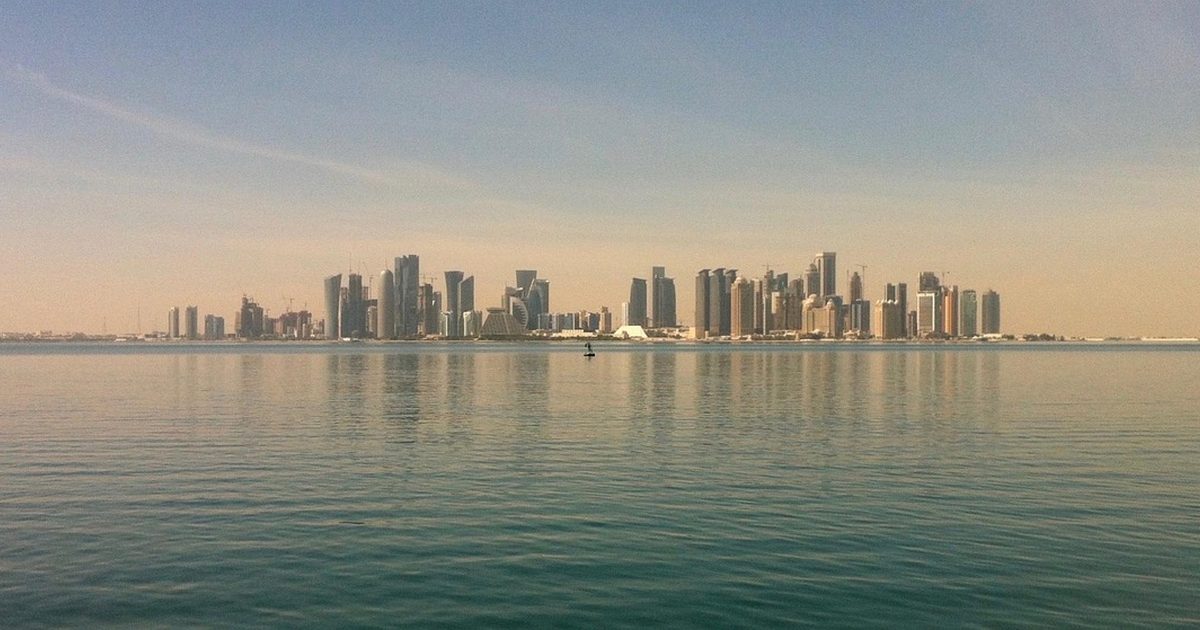
Qatar is one of the wealthiest countries per capita in the world and a major employer of UK professionals in engineering, energy, construction, finance, healthcare, education, and professional services. Around 16,000 UK nationals live there. The FIFA World Cup 2022 investment wave has left behind a transformed infrastructure. Qatar offers zero personal income tax, high salaries, and generous expat packages — but residency is exclusively employer-sponsored through the Qatar ID (QID) system, and there is no social security agreement with the UK.
Key takeaways
- Zero personal income tax in Qatar — employment earnings are untaxed
- No UK–Qatar social security agreement: pay voluntary Class 3 NI (£907/year in 2026/27) to protect your UK State Pension
- A medium lifestyle for a family of 4 costs around £8,700/month (£104,400/year) — illustrative, June 2026; energy and construction packages often include housing and school fees
- British-curriculum school fees: QAR 45,000–110,000/year per child (£9,900–£24,200); check whether your package covers this
- Dependant sponsorship requires a minimum salary of QAR 7,000/month; most professional packages exceed this
- This is general information, not personal financial, tax, immigration or legal advice
Work & income: what UK professionals earn
Qatar has no personal income tax on employment earnings. This makes the gross-to-net comparison straightforward: what you earn is what you keep, minus Qatari government social insurance for Qatari nationals (which does not apply to expatriates). UK professionals in energy (QatarEnergy, Shell, TotalEnergies), construction, healthcare, finance, and education earn QAR 25,000–80,000/month (£5,500–17,600) gross for mid-to-senior roles; partner, director, and specialist roles can reach QAR 100,000+/month (£22,000+). Many packages in energy and large-scale construction include housing, transport, and school-fee allowances — all of which are tax-free in Qatar.
Use our financial planning tools to model your Qatar net income, voluntary NI contributions, UK pension contributions, and long-term wealth plan. A regulated financial adviser with Gulf cross-border expertise is essential: UK tax residency breaks, the treatment of UK rental income while Qatar-resident, and pension contribution strategy require specialist planning.
The money: a 3-tier monthly family budget
The table below is an itemised monthly budget for a family of four (two adults, two school-age children) in Doha. All figures in GBP at illustrative June 2026 exchange rates (QAR 1 ≈ £0.220). Many packages in energy and government-linked sectors include housing and school fees; the ‘employer-pays’ version of these budgets is significantly lower in net cost. The Medium column — approximately £8,676 a month (£104,100/year) — represents a comfortable lifestyle in central or West Bay Doha with one child at a British-curriculum school.
| Monthly cost (family of 4) | Basic | Medium | High |
|---|---|---|---|
| Rent (3-bed villa/apt) | £1,800 | £2,900 | £4,800 |
| Utilities, A/C & internet | £220 | £300 | £450 |
| Groceries | £500 | £750 | £1,100 |
| Transport (car running costs) | £300 | £480 | £750 |
| Healthcare (employer plan top-up) | £150 | £280 | £500 |
| School fees – 2 children (term 1/12) | £1,500 | £2,600 | £4,400 |
| Eating out & leisure | £400 | £700 | £1,300 |
| Household help | £150 | £250 | £420 |
| Clothing, personal, sundry | £180 | £340 | £650 |
| Voluntary UK NI (Class 3) | £76 | £76 | £76 |
| Monthly total (approx) | £5,276 | £8,676 | £14,446 |
Illustrative monthly estimates for a family of four in Doha, June 2026. School fees annualised and divided by 12; charged termly. Large-package employers in energy and construction routinely cover housing and school fees in full — confirm what is included before comparing packages. Exchange rate: QAR 1 ≈ £0.220.
Annual equivalents: Basic ≈ £63,300/year — Medium ≈ £104,100/year — High ≈ £173,400/year.
Visas & residency: the QID system
Qatar operates an employer-sponsored residency system. Every expatriate worker requires a Qatar ID (QID), a biometric residency card issued once you have entered on a work visa and completed registration. The process:
- Your Qatari employer obtains an entry visa (work permit) from the Ministry of Labour on your behalf.
- You enter Qatar on the work visa, complete a medical examination, and register for an Emirates ID equivalent — the QID (Residence Permit) — valid for two years and renewable with continued employment.
Qatar reformed the kafala (sponsorship) system in 2020–2022. Workers can now change jobs without their employer’s consent after completing their contract period (or, in certain circumstances, before), and exit visas for most workers are no longer required. However, in practice many roles still use fixed-term contracts where switching employer mid-term may trigger complex negotiations. Dependant sponsorship (spouse and children under 18) requires the QID holder to earn a minimum of QAR 7,000/month (£1,540). Most professional expat salaries greatly exceed this threshold. Families must be sponsored on the primary worker’s QID.
Schools & education
Qatar’s state schools teach in Arabic and serve Qatari nationals; expat children almost universally attend private international schools. Doha has a large selection, overseen by the Private Schools Affairs sector of the Ministry of Education. British-curriculum schools are well represented: Doha British School, The English Modern School, The International School of London (Qatar), and Cambridge International School are among the most popular. Annual fees range from approximately QAR 45,000 to QAR 110,000 per child per year (£9,900–£24,200), with elite IB and British schools at the higher end. A significant number of large employers — particularly in energy, construction, and healthcare — cover school fees either fully or to a capped allowance as part of the expat package. Confirm the school-fee provision before accepting a package; it is often the largest variable in your net financial position. Figures are illustrative and sourced as of June 2026.
Childcare
Private nurseries are the primary childcare option. Full-day nursery in Doha costs approximately QAR 2,500–5,000/month (£550–1,100) per child. Some international school groups operate nursery sections from age 2. There is no state-funded free childcare for expatriates. Domestic helpers (maids) are common in expat households and relatively affordable: domestic worker visas are employer-sponsored and average salaries are QAR 1,200–2,000/month (£264–440). Figures are illustrative and sourced as of June 2026.
Healthcare
Qatar mandates that employers provide health insurance for all employees and their sponsored dependants under the National Health Insurance Company (Seha) framework. The employer-provided plan covers a baseline of services at public Hamad Medical Corporation (HMC) hospitals, which are of a high standard. Many expat packages top this up with private health insurance at Sidra Medicine, Al Ahli Hospital, Aspetar (sports medicine), or international-standard private clinics.
Emergency care across the HMC network is excellent. For specialist outpatient care, private clinics provide faster access. Dental and optical coverage varies by plan. When comparing packages, confirm whether the employer plan covers dependants and what the network, co-payment, and annual limits are.
Money, tax & UK NI: the critical points
Qatar has no personal income tax. Your employment income is untaxed. There is no capital gains tax on personal investments and no inheritance tax under Qatari law. This is the dominant financial attraction of a Qatar assignment for UK professionals.
Qatar has no reciprocal social security agreement with the UK. Working in Qatar does not build UK National Insurance qualifying years. The consequences for your UK State Pension can be significant: each year in Qatar without paying voluntary UK NI costs you approximately £350/year off your State Pension for life — and gaps older than six years generally cannot be filled retrospectively. Paying voluntary Class 3 NI contributions (£17.45/week, £907/year in 2026/27) keeps your State Pension record intact. This is one of the most cost-effective financial protections available to any Gulf-based UK national.
Use our projection tools to model the long-term State Pension impact alongside your Qatar package, voluntary NI costs, savings plan, and UK pension. Take advice from a regulated financial adviser with Gulf–UK expertise to structure your finances efficiently: UK rental income, ISA contributions (ISA allowance runs on regardless of where you live), and eventual UK return planning all require specialist input.
Qatar does not have a state pension system for expatriates. End-of-service gratuity under the Qatar Labour Law is three weeks’ basic salary per year of service for the first five years and four weeks per year thereafter — a lump sum, not ongoing retirement income.
Daily life, safety & crime
Qatar ranks among the safest countries in the world. Violent crime is very low. Islamic law influences the legal framework: alcohol is available to non-Muslims in licensed hotel bars and at the Qatar Distribution Company (QDC) — the sole off-licence — but must not be consumed in public. Qatar’s summers (May–September) are extremely hot and humid (38–45°C). Most families take extended leave during summer. The social scene is concentrated around hotels, malls, the Corniche, Katara Cultural Village, Msheireb Downtown, and the 2022 World Cup stadiums (now used for events). Family-friendly activities, beach clubs, and leisure are extensive. The road network and transport infrastructure have been massively upgraded. Crime and safety figures are illustrative and sourced from GPI 2024 and Qatar Ministry of Interior statistics.
Family SWOT: working in Qatar
A strengths / weaknesses / opportunities / threats view of a UK working family relocating to Qatar:
Strengths
- Zero personal income tax; very high gross salaries in energy, construction, and professional services
- Many packages include housing, car, and school-fee allowances — significantly reducing net family cost
- Mandatory employer health insurance covers employees and often dependants
- Very low crime rate; family-safe environment
- Strong British expat community; good selection of British-curriculum schools in Doha
Weaknesses
- No UK SS agreement: voluntary NI is essential to protect your State Pension record
- Residency 100% employer-tied; job loss triggers QID cancellation (grace period applies)
- School fees QAR 45,000–110,000/year per child if not covered by package
- Extreme summer heat; most families take extended UK leave, adding travel cost
Opportunities
- Qatar National Vision 2030 is driving massive long-term infrastructure and LNG investment — strong demand for UK professionals
- Job-change now easier post-kafala reform; less locked to a single employer
- Tax-free saving potential is very high on large Gulf packages; UK ISA allowance continues to run
- Regional gateway to broader Gulf and Middle East careers
Threats
- Geopolitical risk in the Gulf; Qatar has previously experienced blockade and regional isolation
- UK-sourced income (rental property, dividends) remains taxable in the UK regardless of Qatar residency
- End-of-service gratuity is a contractual right but paid only on basic salary — allowances are excluded
- Long-term career dependency on Gulf energy sector; diversification into other regions may require a planned exit strategy
Comparing destinations? See where Qatar ranks in our round-up of the lowest-tax destinations for UK workers abroad, or read the full Working Abroad from the UK guide for all twenty destinations compared side-by-side.
Important: This guide is for general educational purposes only and does not constitute financial advice. Tax rules can change and individual circumstances vary. If you need advice tailored to your situation, please consult a qualified, FCA-regulated financial adviser. You can browse advisers in our adviser directory.