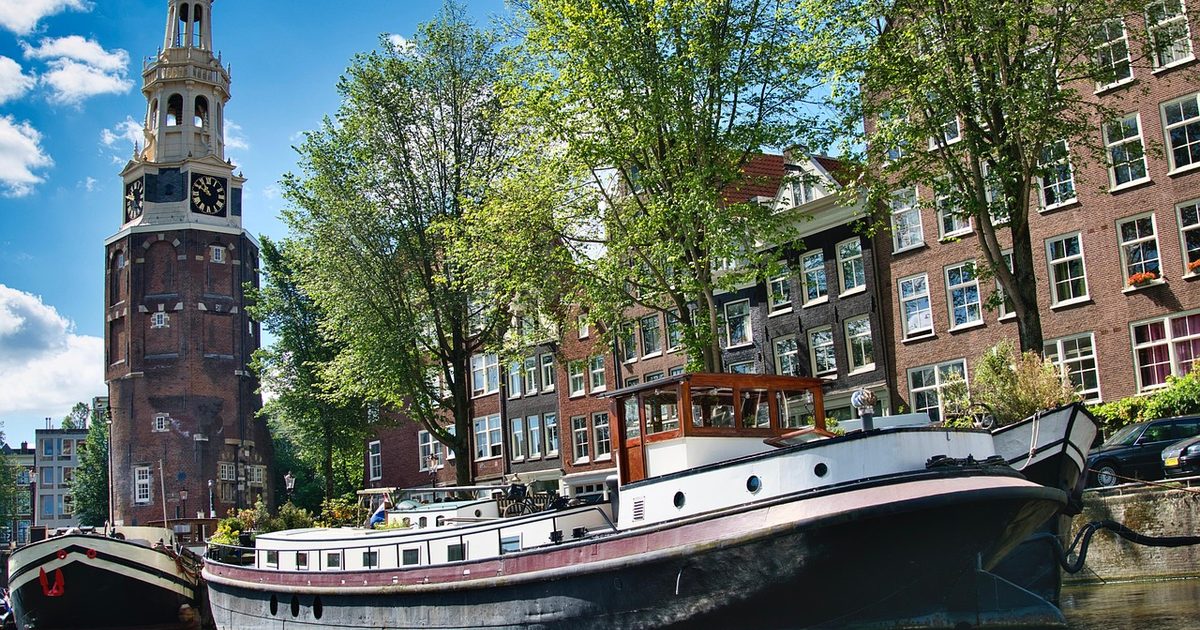
The Netherlands attracts UK professionals with very fast permit processing, near-universal English fluency, an excellent international school scene, and the <strong>30% ruling</strong> — one of the most generous inbound tax incentives in Europe. Around 55,000 UK nationals live there. Amsterdam’s cost of living has risen steeply in recent years, but the Randstad as a whole, and cities like Eindhoven and Rotterdam, remain more affordable for families.
Key takeaways
- A family of 4 needs around £5,740/month (£68,900/year) for a medium lifestyle in Amsterdam — illustrative, June 2026; Rotterdam and Eindhoven are 15–25% cheaper
- UK State Pension is uprated in the Netherlands (EEA — triple lock applies), unlike in Australia or Canada
- 30% ruling: up to 5 years of 30% tax-free salary reimbursement for qualifying international recruits
- HSM permit typically processed in 2–4 weeks; English almost universally spoken in professional settings
- Information only, not personal financial advice
What does a family of four spend each month?
The table below sets out an itemised monthly budget for two adults and two school-age children at three lifestyle levels. The Medium column — around £5,740 a month (£68,900/year) — reflects a comfortable professional lifestyle in Amsterdam or the Randstad. Eindhoven and Rotterdam are typically 15–25% cheaper. All figures are in GBP at illustrative June 2026 exchange rates (€1 ≈ £0.85).
| Monthly cost (family of 4) | Basic | Medium | High |
|---|---|---|---|
| Rent (3-bed) | £1,500 | £2,200 | £3,400 |
| Utilities & internet | £180 | £240 | £330 |
| Groceries | £540 | £720 | £1,000 |
| Healthcare (ZVW basic insurance) | £90 | £140 | £280 |
| Transport (OV / car) | £160 | £280 | £480 |
| School fees (state = £0; international) | £0 | £880 | £1,600 |
| Childcare (kinderopvang after subsidy) | £350 | £560 | £850 |
| Eating out & leisure | £230 | £400 | £600 |
| Other | £200 | £320 | £500 |
| Monthly total | £3,250 | £5,740 | £9,040 |
The headline pros and cons
The quick case for and against a UK working family relocating to the Netherlands:
Pros
- UK State Pension stays uprated (EEA — triple lock applies)
- 30% ruling: up to 5 years of tax-free salary reimbursement for qualifying international recruits
- English widely spoken — lowest language barrier of any non-English EU destination
- HSM permit typically processed in 2–4 weeks; family can join quickly
- Kinderopvangtoeslag subsidy cuts net childcare costs by 33–96%
Cons
- Post-Brexit: employer-sponsored Highly Skilled Migrant permit required — no free movement
- Amsterdam rents have risen sharply and are now among the highest in Northern Europe
- 30% ruling reduced from 8 to 5 years; full Dutch income tax rate of 49.5% above €75,518 applies after
- Box 3 investment tax reform may affect UK investors holding Dutch-based assets
The State Pension advantage and the 30% ruling — bottom line
The Netherlands combines two strong financial advantages for UK professionals. First, your UK State Pension is uprated annually under the triple lock because the Netherlands is in the EEA — in contrast to Australia, Canada, and New Zealand where it is frozen. Second, the 30% ruling can effectively reduce your Dutch income tax rate to approximately 28–35% for up to five years by allowing your employer to pay 30% of your gross salary tax-free. For a professional on €100,000, the ruling can save €10,000–20,000/year in tax — often enough to fund international school fees. After five years, the standard Box 1 rate of 49.5% above €75,518 applies, which is worth factoring into your longer-term planning. Use our projection tools to model the 30% ruling window, uprated State Pension, and Dutch AOW accrual side by side, and take advice from a regulated financial adviser with Dutch–UK expertise. For the complete picture on the HSM permit, schools, healthcare, and AOW pension, read our companion guide to working and living in the Netherlands.
This article is general information, not personal financial, tax, immigration or legal advice. Every figure is illustrative and approximate, sourced as of June 2026 — rules and costs change. Take regulated advice before you act.
Important: This article is for general educational purposes only and does not constitute financial advice. Tax rules can change and individual circumstances vary. If you need advice tailored to your situation, please consult a qualified, FCA-regulated financial adviser. You can browse advisers in our adviser directory.